
Total immersion is the fastest way many learners reach conversational skill: you live in the language, not just study it. The good news, you don’t need to move abroad. With the right routine and tools, you can recreate immersion from home, turning minutes of idle time into continuous exposure. This guide explains what immersion really is, how to build it step by step, and how to avoid the most common pitfalls.
What is total immersion?
Total immersion means designing your day so that most inputs, audio, text, conversation, even your phone’s UI, arrive in the target language. Instead of isolated study sessions, you create a language-rich environment that keeps your brain constantly processing real usage. This accelerates listening comprehension, builds natural phrasing, and helps pronunciation by copying native rhythm and intonation.
Immersion is not “only watching shows.” It’s a deliberate system mixing comprehensible input, active output, and micro-habits that repeat daily.
How to
How to build immersion (step by step)
Total Time: 1 hour and 30 minutes
1. Switch your world to the target language.
Change your phone, apps, and Google interface to the language.
Follow news feeds, creators, and podcasts from your target region.
Replace background content: commute, cooking, workouts → target-language audio.
2. Create a daily input stack (90–120 minutes total, broken up).
20–30 min graded listening or beginner podcasts (comprehensible input).
20–30 min series or YouTube with subtitles → then without.
10–15 min reading: short articles, graded readers, or transcripts.
5–10 min pronunciation work (shadowing) on 1–2 clips.
3. Lock in active output.
Schedule 2–3 conversational practice sessions per week (tandem exchange or tutor).
Record 60–90 seconds of speaking daily (diary audio). Track progress weekly.
4. Loop vocabulary with spaced repetition.
Mine phrases from what you watched/read and review them using flashcards.
Prefer full chunks (“I’d like a coffee, please”) over single words.
5. Design micro-habits and triggers.
After breakfast → 10 min listening. Bus stop → read a short post. Evening walk → shadow one clip.
6. Track, adjust, repeat.
Each Sunday: note minutes listened, words/phrases learned, and speaking time.
Increase difficulty only when comprehension is consistently 80%+.
Immersion toolkit (beginner to intermediate)
- Listening: beginner podcasts, graded YouTube channels, radio with slow news.
- Shadowing: 30–60 sec clips with transcripts; repeat in rhythm until fluid.
- Flashcards: create cards with audio + phrase + translation; review daily.
- Speaking: language exchange apps or tutors; focus on real tasks (ordering, small talk, directions).
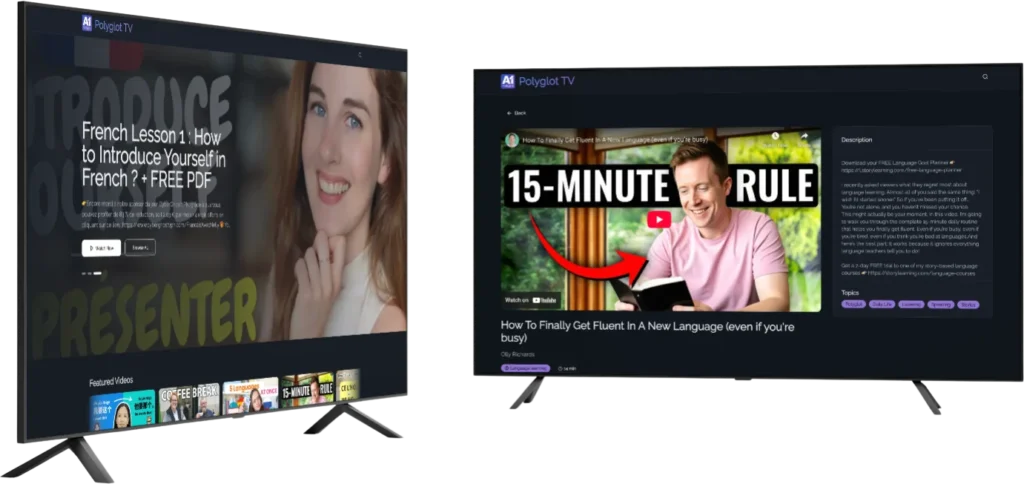
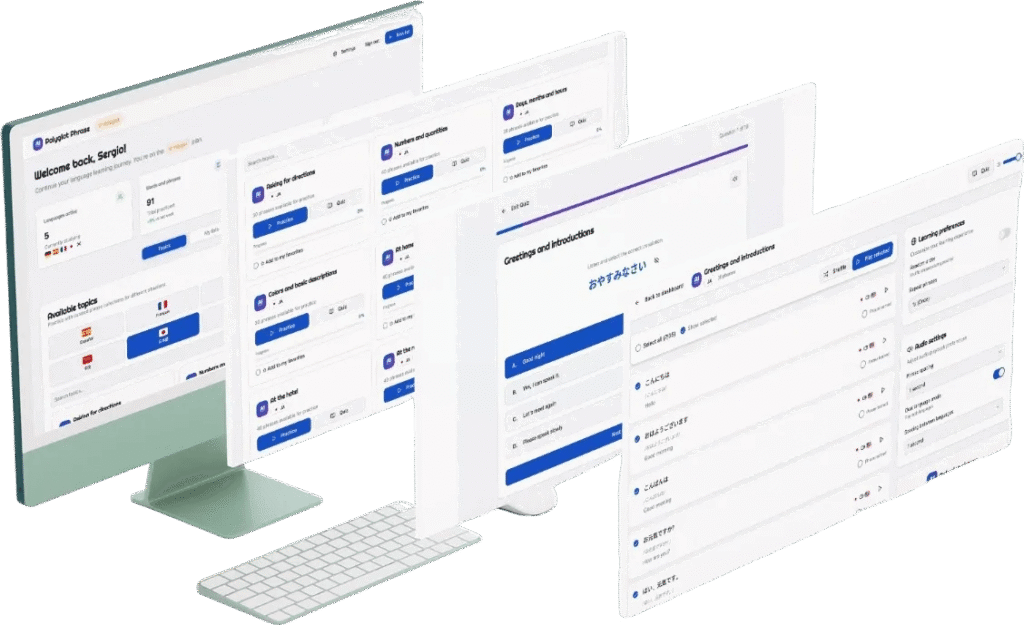
- Apps: try the A1 Polyglot web app to pick your best methods and build a routine.
Why total immersion works
- High exposure frequency: repeated contact with common patterns speeds up comprehension.
- Context binding: vocabulary learned in real contexts is easier to recall and use.
- Pronunciation & prosody: constant listening + shadowing tunes your accent naturally.
- Motivation loop: noticeable progress from daily contact sustains long-term effort.
Common mistakes (and fixes)
- Only passive bingeing. Fix: add short speaking and shadowing blocks daily.
- Content too hard. Fix: choose graded sources; aim for ~80% understanding.
- Word-by-word study. Fix: learn phrases you’ll actually say this week.
- No schedule. Fix: tie activities to routines (commute, meals, walks).
- Burnout from volume. Fix: start with 45–60 min/day and scale gradually.
A simple 7-day immersion plan
Daily (Mon–Sun): 15 min graded listening, 10 min shadowing, 10 min reading, 5 min flashcards.
Mon/Wed/Fri: 20–30 min conversation or voice diary.
Weekend: watch a movie or two episodes; mine 10 phrases you want to reuse next week.
Do I need to live abroad?
No. With curated input, online partners, and daily micro-habits, you can replicate most benefits at home.
How long to notice results?
Many beginners feel a jump in listening after 4–6 weeks of steady immersion (60–90 min/day).
What if I lack time?
Stack micro-sessions: 10 min morning, 10 min lunch, 10 min evening. Consistency beats intensity.
Try immersion with A1 Polyglot
Build your personal immersion routine with our mini-apps and resources. Start by identifying your best learning methods in the A1 Polyglot Methods web app, then practice daily with phrase collections and audio drills.