

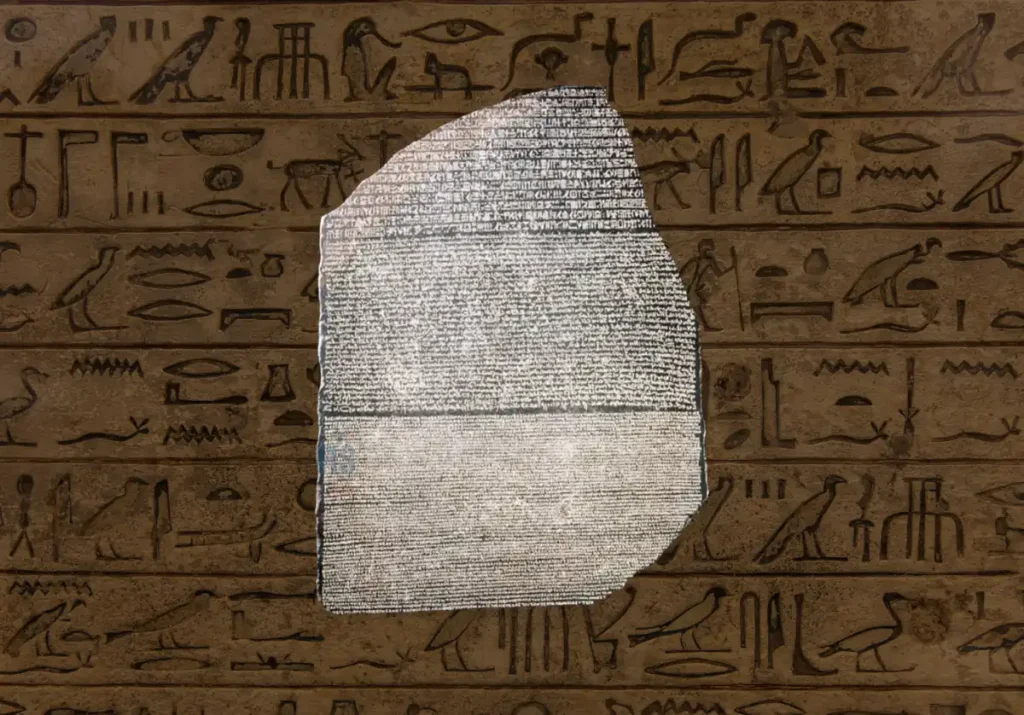
The Rosetta stone changed how the world understood ancient Egyptian writing. For centuries, hieroglyphs were a complete mystery, with temples, tombs, and monuments covered in beautiful symbols no one could read. Many believed they were only religious images, not a real writing system with sounds and structure.
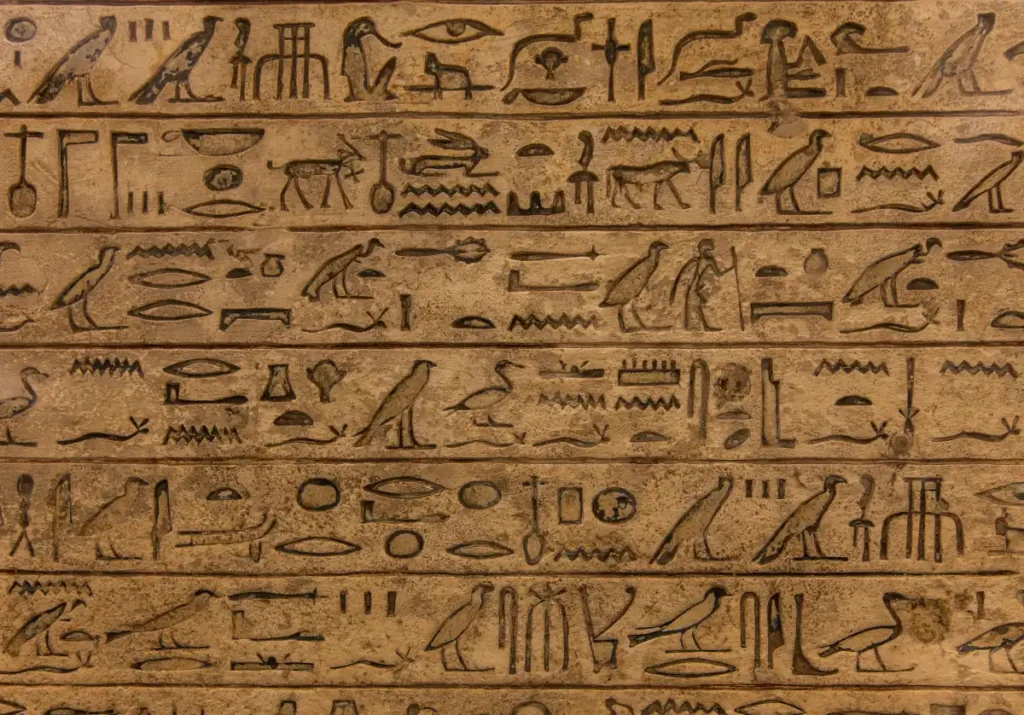
Ancient Egypt had left an enormous legacy, but its language was silent.
That silence ended in 1799, when French soldiers discovered a large stone near the town of Rosetta in the Nile Delta. What made it extraordinary was that the same text appeared in three different scripts:
• Egyptian hieroglyphs
• Demotic, the everyday writing of ancient Egypt
• Ancient Greek
Because scholars could already read Greek, they finally had a linguistic key to compare and decode the unknown system.
The breakthrough that unlocked hieroglyphs
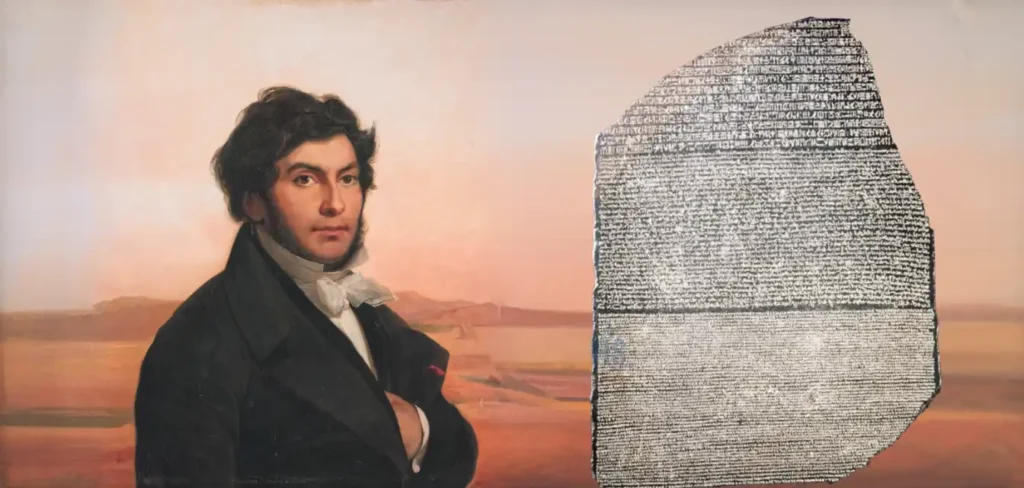
For years, researchers struggled to fully understand the inscriptions. The real breakthrough came in 1822 with linguist Jean-François Champollion. He noticed that royal names such as Ptolemy and Cleopatra appeared in special oval shapes called cartouches.
By matching the Greek versions of these names with their hieroglyphic symbols, he realized something revolutionary:
Hieroglyphs represented sounds, not just ideas.
This revealed that Egyptian writing combined:
• Phonetic symbols (sounds)
• Meaning-based symbols
• Clarifying signs for context
Once this system was understood, thousands of ancient texts suddenly became readable.
Why the Rosetta Stone matters for language learning
The Rosetta Stone did more than decode a civilization. It transformed how linguists understand writing systems and language evolution.
Thanks to this discovery, scholars were able to:
• Recover the real history of ancient Egypt
• Understand how complex scripts function
• Preserve an entire culture through its own words
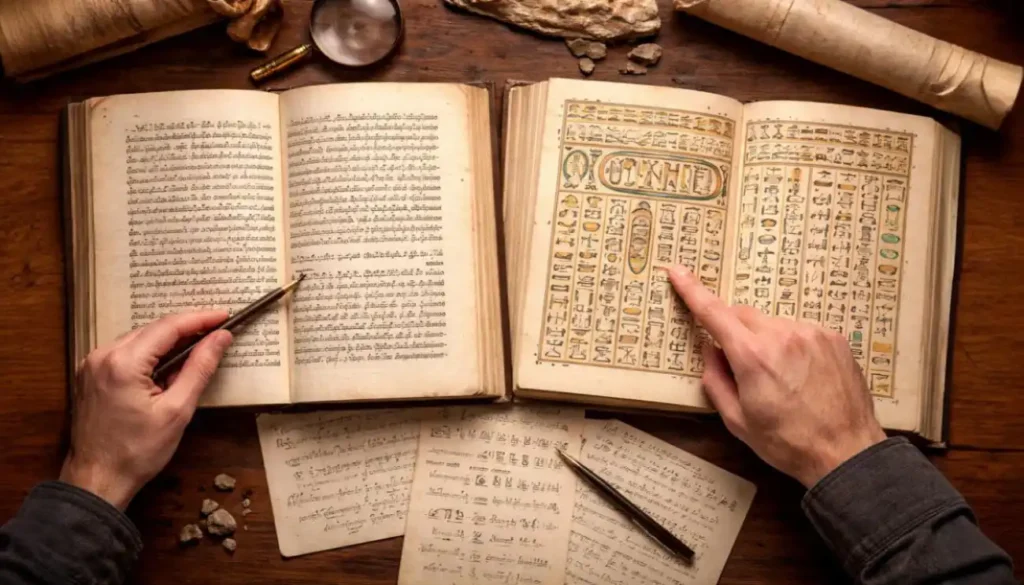
Important note: the Rosetta Stone is one of the earliest examples of learning through language comparison, the same core strategy used in modern language learning today.
From archaeology to modern language education
The name “Rosetta” has become a global symbol for language learning tools because it represents clarity after confusion.
At A1 Polyglot, this same principle drives the learning experience: building bridges between known language patterns and new ones through context, repetition, and real usage. Instead of memorizing random vocabulary, learners decode how a language works naturally.
The lasting lesson of the Rosetta Stone
Languages are not impossible codes. They are systems that can be understood with the right method.
What remained unreadable for over a thousand years was solved by recognizing patterns, sounds, and connections.
When you understand a language, you don’t just learn words. You unlock entire cultures and human stories.