




When language becomes a bridge, history begins. Few figures embody that idea better than Herodotus of Halicarnassus, the 5th-century BCE Greek historian often called “the Father of History.” Living at the intersection of Greece and the Persian Empire, Herodotus was surrounded by a mosaic of languages and cultures. His work, Histories, was not just a chronicle of wars but a dialogue among civilizations. Through his curiosity and respect for difference, Herodotus transformed storytelling into an act of translation between peoples, beliefs, and worlds.
Herodotus traveled widely across the eastern Mediterranean, Egypt, and possibly Mesopotamia. He recorded what he heard from interpreters, merchants, priests, and travelers, carefully noting the customs and tongues of each region. In Histories, he even mentions using “interpreters” (hermēneis) when describing Egyptian society. This detail reveals both the linguistic diversity of the ancient world and his awareness of how language shapes perception. Herodotus rarely mocked foreign customs; instead, he sought to understand them through conversation. In doing so, he became the first historian to recognize that translation is not only linguistic, it is cultural.
To the Greeks of his time, understanding other peoples’ languages was more than practicality, it was philosophy. The word barbaros originally meant anyone whose speech sounded unfamiliar, the onomatopoeic “bar-bar” of unintelligible sound. Yet Herodotus challenged that prejudice by giving voice to those labeled “barbarians.” He described Persians, Egyptians, and Scythians with the same narrative dignity as Greeks, suggesting that wisdom could speak in many tongues.
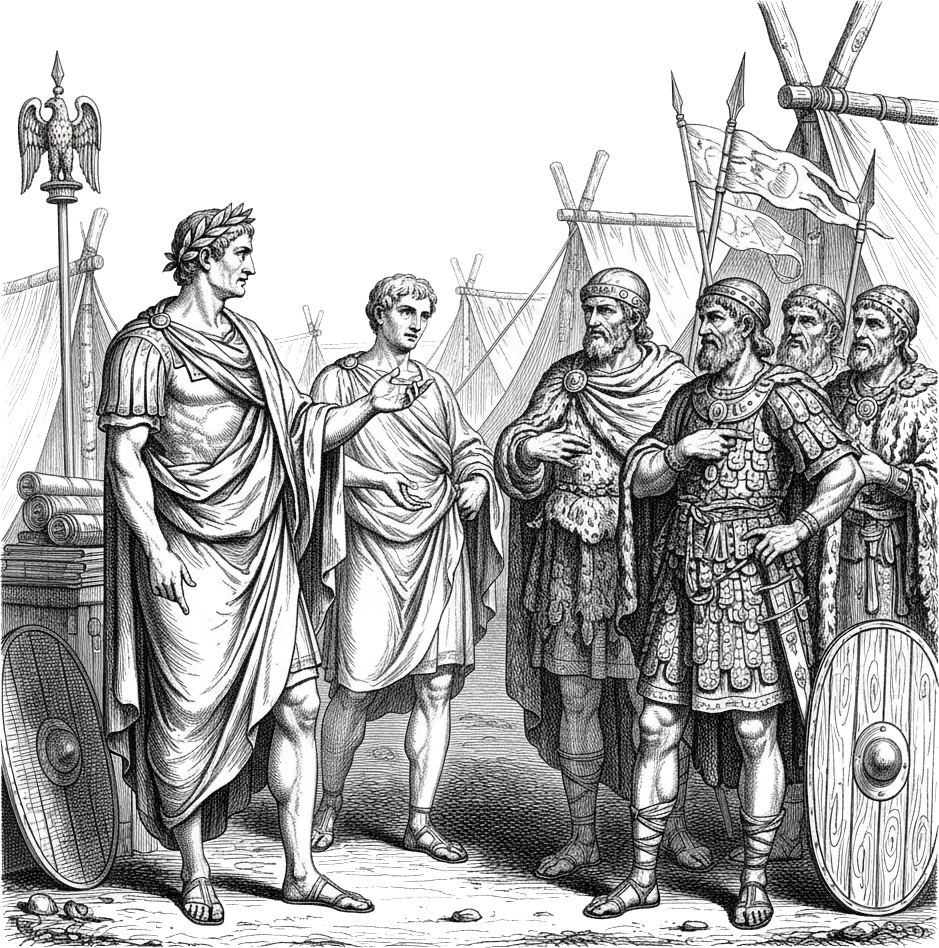
Herodotus’ method influenced later historians such as Polybius and Strabo, who also sought to understand nations through geography, language, and custom.
His legacy endures because he treated the act of listening as sacred. To gather stories from interpreters and travelers was, for him, to collect fragments of truth scattered across languages. In this way, Herodotus became the first great polyglot chronicler, not by mastering many languages himself, but by understanding that no single tongue can contain the full story of humanity.
The spirit of Herodotus reminds us that being a polyglot is not only about speaking but about perceiving. Every new language opens another horizon of empathy. His curiosity remains a lesson for today’s students of languages: to study words is to study worlds.