




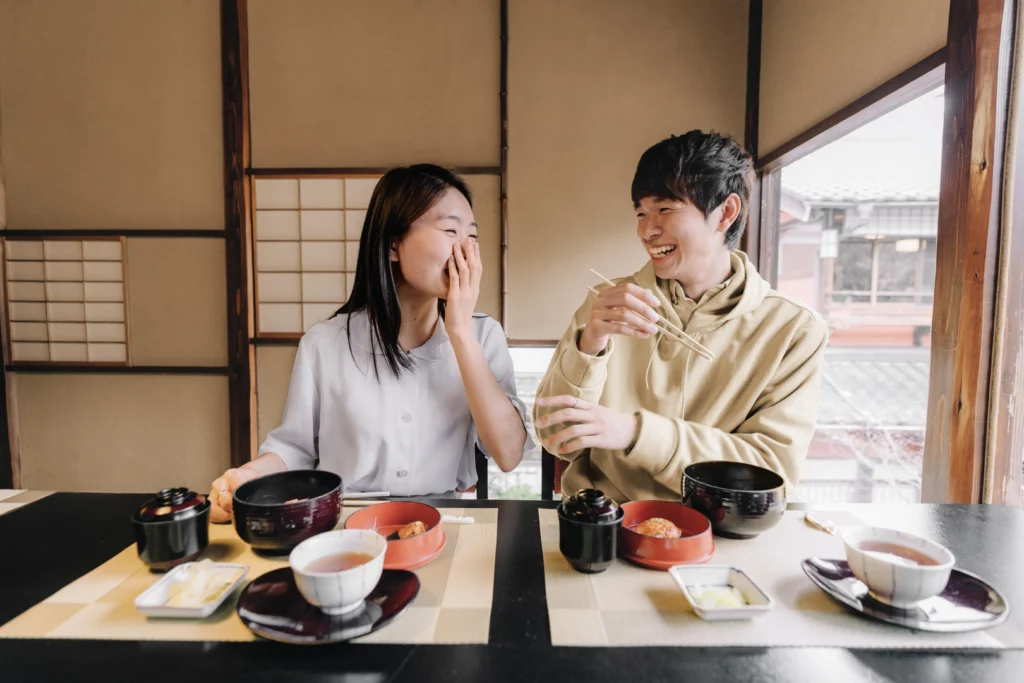
レストランで友達と食事をします。
Two friends are eating at a restaurant.
Conversation
Customer 1
おなかがすきましたね。
(Onaka ga sukimashita ne.)
I'm hungry, aren't I?
Customer 2
はい、私もです。
(Hai, watashi mo desu.)
Yes, me too.
Waiter
いらっしゃいませ。何名様ですか。
(Irasshaimase. Nanmei-sama desu ka?)
Welcome. How many people?
Customer 1
二人です。
(Futari desu.)
Two people.
Waiter
どうぞ、こちらへ。
(Dōzo, kochira e.)
Please, this way.
Customer 1
ありがとう。
(Arigatō.)
Thank you.
Customer 2
メニュー、ありますか。
(Menyū, arimasu ka?)
Do you have a menu?
Waiter
はい、どうぞ。
(Hai, dōzo.)
Yes, here you go.
Customer 1
私はラーメンがいいです。
(Watashi wa rāmen ga ii desu.)
I want ramen.
Customer 2
私はカレーライスがいいです。
(Watashi wa karēraisu ga ii desu.)
I want curry rice.
Waiter
ラーメンとカレーライスですね。かしこまりました。
(Rāmen to karēraisu desu ne. Kashikomarimashita.)
Ramen and curry rice, right? Understood.
Customer 1
お願いします。
(Onegai shimasu.)
Please.
Key Vocabulary
- おなかがすきました (onaka ga sukimashita) — I'm hungry
- 私もです (watashi mo desu) — me too
- いらっしゃいませ (irasshaimase) — Welcome
- 何名様ですか (nanmei-sama desu ka) — How many people?
- 二人 (futari) — two people
- どうぞ (dōzo) — Please/Here you go
- こちらへ (kochira e) — this way
- メニュー (menyū) — menu
- ありますか (arimasu ka) — Do you have?
- ~がいいです (~ ga ii desu) — I want/prefer ~
- かしこまりました (kashikomarimashita) — Understood (polite)
- お願いします (onegai shimasu) — Please (when ordering)
Grammar Notes
Particles 'ga' and 'mo'
'ga' marks the subject of a sentence, often used with verbs like 'sukimasu' (to get hungry). 'mo' means 'also' or 'too'.
Example: “おなかがすきましたね。(Onaka ga sukimashita ne.) / はい、私もです。(Hai, watashi mo desu.)”
Using '~がいいです' for preferences
This phrase is used to express what someone wants or prefers, especially when choosing from options.
Example: “私はラーメンがいいです。(Watashi wa rāmen ga ii desu.)”
Polite requests and greetings
'Irasshaimase' is a standard welcome. 'Dōzo' is a versatile word meaning 'please' or 'here you go'. 'Onegai shimasu' is used when making a request, like ordering food.
Example: “いらっしゃいませ。(Irasshaimase.) / どうぞ、こちらへ。(Dōzo, kochira e.) / お願いします。(Onegai shimasu.)”