
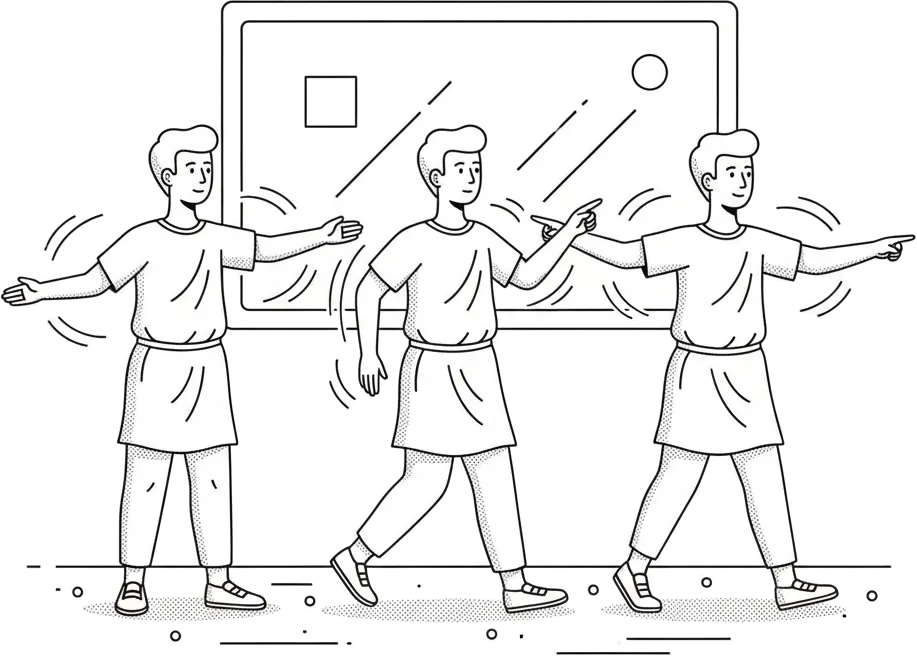
The Total Physical Response (TPR) method helps you learn a language by linking words to physical movement. Developed by psychologist James Asher, it’s based on the idea that action strengthens memory and understanding. TPR turns learning into an active, engaging experience where listening and doing happen together.
What is Total Physical Response?
Total Physical Response is a teaching method that combines language and physical movement. Instead of memorizing vocabulary, learners perform actions when they hear commands — for example, “stand up,” “open the door,” or “pick up the book.” This process builds a strong connection between words and meaning, making language acquisition more natural.
It’s especially effective for beginners and kinesthetic learners who learn best through activity and repetition.
Core principles of TPR
- Action-based learning: physical movement reinforces understanding.
- Comprehension first: learners listen and respond before speaking.
- Stress-free learning: no pressure to speak until ready.
- Memory through association: actions create deeper mental connections.
- Fun and engagement: movement keeps energy and focus high.
How to
How to apply TPR in self-study
1. Start with simple commands.
Use everyday actions like “sit,” “walk,” “turn around,” or “write.”
2. Listen and respond physically.
Follow audio lessons or videos and perform each command immediately.
3. Repeat and expand.
Add more complex instructions like “pick up the pen and place it on the table.”
4. Combine listening and speaking.
Once comfortable, say the commands while performing them.
5. Create your own sequences.
Design mini routines (like morning activities) to practice naturally.
Why Total Physical Response works
- Improves memory retention: movement strengthens neural connections.
- Enhances comprehension: meaning is learned through context, not translation.
- Reduces anxiety: removes pressure to produce speech too early.
- Fun and motivation: keeps practice enjoyable and active.
- Great for all ages: adaptable from children to adults.
Common mistakes (and how to fix them)
- Skipping the listening phase. Fix: understand before speaking — comprehension builds confidence.
- Overcomplicating commands too soon. Fix: start with simple actions and build gradually.
- Not using real movement. Fix: physical response is essential — don’t replace it with imagination only.
- Stopping too early. Fix: repeat actions frequently until they become automatic.
Suggested practice routine
10 min: listen to basic command audios and follow them physically.
10 min: create new commands and perform them yourself.
5 min: combine multiple actions into short sequences.
5 min: record yourself giving commands and follow along again.
Total: 30 minutes per day for active learning.
FAQ
Is TPR only for children?
Not at all. It’s highly effective for adults who enjoy hands-on learning.
Do I need a teacher?
No — audio, video, or apps can guide you through physical practice.
Can I combine it with other methods?
Yes, especially with the Natural or Communicative approaches.
Does it help pronunciation?
Yes — connecting sound, meaning, and movement improves recall and rhythm.
Move with your learning — A1 Polyglot
Combine TPR with listening and interactive tools for fast, memorable results. Take the A1 Polyglot Method Quiz to find the best balance of movement, listening, and comprehension for you.