




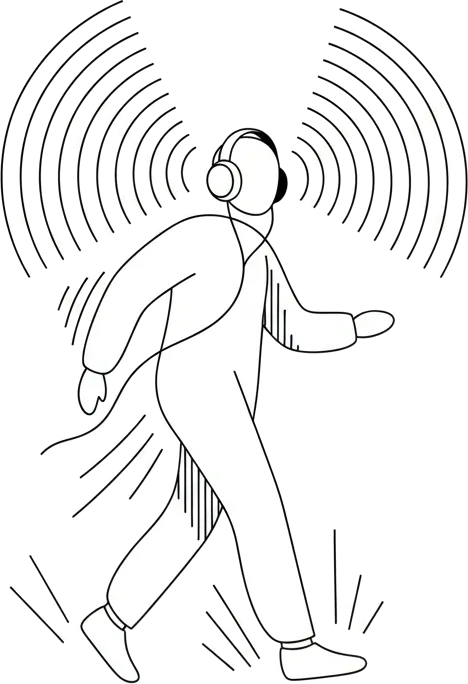
The shadowing technique is one of the fastest ways to improve pronunciation, rhythm, and fluency in a new language. Originally developed by polyglot and linguist Alexander Arguelles, it involves listening to a native speaker and repeating their words simultaneously, not after. This method forces your brain to process sound and meaning at the same time — just like real communication.
What is the shadowing technique?
Shadowing is a speaking and listening exercise where you imitate native audio in real time. As you listen, you repeat every word with matching tone, speed, and intonation. It’s more than simple repetition — it’s active synchronization between your ears, voice, and brain.
This technique trains both pronunciation and comprehension. By echoing native speakers, you naturally pick up correct rhythm, sentence melody, and even the emotion behind speech.
How to
How to practice shadowing step by step
Tiempo total: 15 minutos
1. Choose the right audio.
Pick short, clear clips (30–60 seconds) from podcasts, dialogues, or videos.
Ensure there’s a transcript available for later comparison.
2. Listen actively first.
Play the clip 2–3 times to grasp general meaning before shadowing.
3. Start shadowing slowly.
Repeat immediately after or slightly overlapping the speaker’s voice.
Focus on matching rhythm and intonation, not every single word at first.
4. Compare and adjust.
Read the transcript out loud and notice where your pronunciation differs.
Record yourself and compare your version to the original.
5. Increase challenge.
Gradually move to faster speech or unfamiliar accents.
Try shadowing short news clips or real conversations.
- Choose the right audio.
- Pick short, clear clips (30–60 seconds) from podcasts, dialogues, or videos.
- Ensure there’s a transcript available for later comparison.
- Listen actively first.
- Play the clip 2–3 times to grasp general meaning before shadowing.
- Start shadowing slowly.
- Repeat immediately after or slightly overlapping the speaker’s voice.
- Focus on matching rhythm and intonation, not every single word at first.
- Compare and adjust.
- Read the transcript out loud and notice where your pronunciation differs.
- Record yourself and compare your version to the original.
- Increase challenge.
- Gradually move to faster speech or unfamiliar accents.
- Try shadowing short news clips or real conversations.
Tips for effective shadowing
- Use headphones: helps isolate pronunciation and timing.
- Keep sessions short: 5–10 minutes daily is better than one long session.
- Focus on flow, not perfection: fluency grows from rhythm and repetition.
- Repeat favorite clips weekly: reinforcement makes the accent stick.
- Combine with reading aloud: improves muscle memory and clarity.
Why shadowing works
- Pronunciation training: immediate imitation builds correct sound habits.
- Listening comprehension: forces you to decode natural speech quickly.
- Fluency & rhythm: trains your mouth to move in sync with native tempo.
- Confidence boost: you start sounding natural without translating mentally.
Common mistakes (and fixes)
- Using long audios. Fix: stay under one minute per clip.
- Speaking too softly. Fix: match native volume and energy for better muscle engagement.
- Skipping comprehension. Fix: always understand meaning before shadowing.
- Ignoring rhythm. Fix: prioritize melody and pauses over word-by-word focus.
- Practicing only once. Fix: repetition is key — review the same clip over several days.
Daily shadowing routine
5 min warm-up: listen and read the transcript once.
10 min shadowing: repeat along with audio 3–4 times.
5 min self-check: record yourself and adjust pronunciation.
Total: 20 minutes — a complete fluency workout.
FAQ
Do I need to understand everything?
No. Focus on rhythm and sound at first; meaning will follow with repetition.
Can I shadow music or movies?
Yes, but choose content with clear speech and minimal background noise.
How often should I shadow?
Daily if possible, even 5 minutes keeps your pronunciation sharp.
Try shadowing with A1 Polyglot
Combine shadowing with other effective methods to accelerate fluency. Take the A1 Polyglot Method Quiz to find your ideal mix of pronunciation, listening, and practice techniques.