




Few names in history embody the fusion of language and power like Julius Caesar. Soldier, statesman, and writer, Caesar understood that empires are not built by the sword alone but by words—the ability to persuade, to negotiate, and to make oneself understood across nations. In the multilingual world of Rome, eloquence was both a weapon and a bridge.
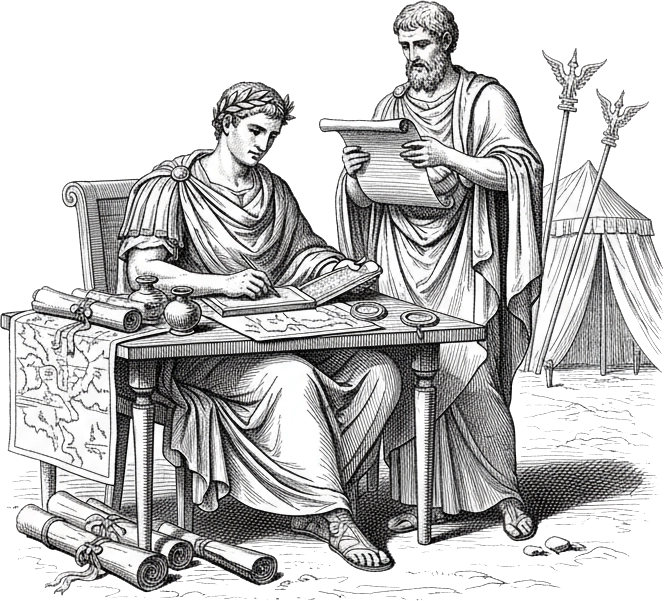
Born in 100 BCE, Caesar belonged to the educated Roman elite, trained in rhetoric and Greek philosophy. Latin and Greek formed the twin pillars of Roman intellectual life; any statesman of rank was expected to command both. But Caesar’s linguistic talents went beyond schooling. According to ancient sources, he spoke Greek fluently and could write with elegance in both languages. His famous Commentarii de Bello Gallico—the Commentaries on the Gallic War—are written in clear, unadorned Latin that reflected both mastery and strategy. By narrating his own campaigns in a simple, direct style, Caesar made his actions accessible to every educated reader in the empire. His prose became a form of diplomacy in itself: concise, persuasive, and impossible to ignore.
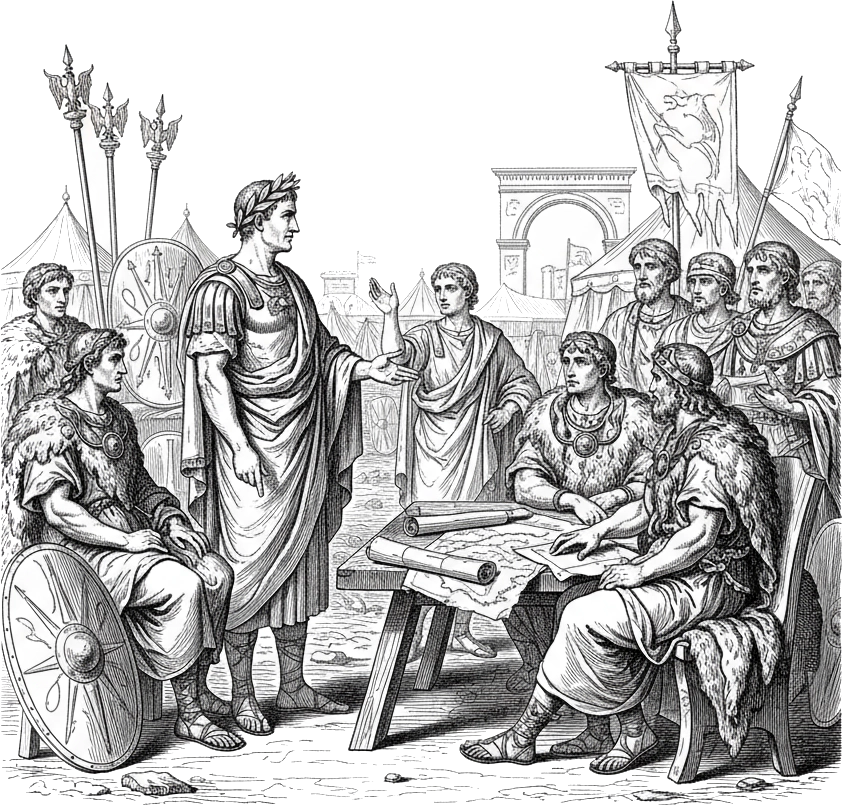
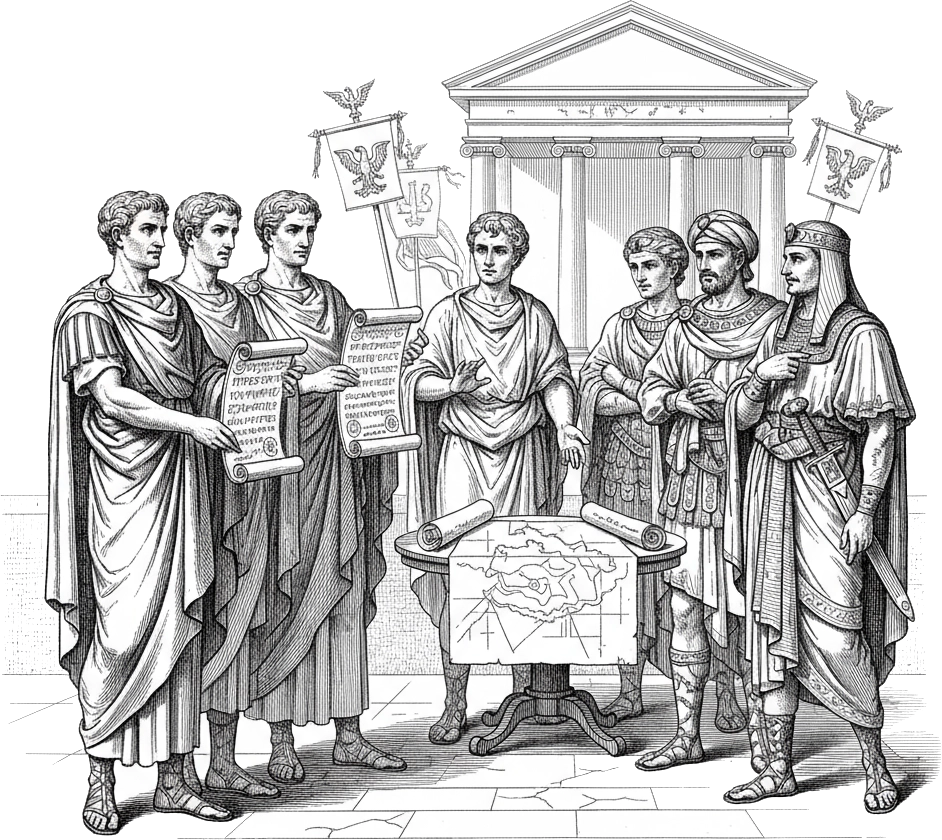
Caesar’s career unfolded in a world of immense linguistic variety. The Roman Republic stretched from Hispania to Asia Minor, encompassing dozens of languages—Celtic, Punic, Aramaic, Coptic, and more. As general, he relied constantly on interpreters and emissaries to communicate with allied and conquered tribes. The Commentaries often mention envoys (legati) and translators who mediated between Roman officers and Gallic leaders. Caesar’s personal ability to grasp and adapt to these exchanges gave him an advantage that was as psychological as it was military.
Diplomacy in Rome required more than authority; it required rhetoric. The Roman Senate valued speech as the highest political art, and Caesar was among its most gifted orators. The biographer Suetonius records that he studied under the famed rhetorician Apollonius Molo of Rhodes, whose pupils included Cicero. Through this training, Caesar learned how language could command loyalty as effectively as legions. His oratory could disarm enemies or rally soldiers, proving that persuasion was as vital to empire as conquest.
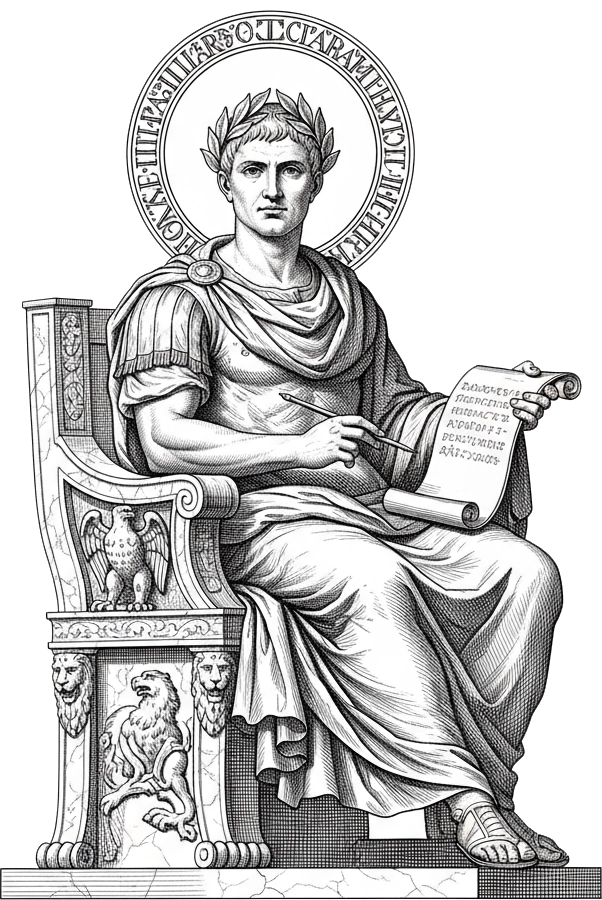
Caesar’s bilingual education also reflected the cultural duality of Rome itself. Greek was the language of philosophy and art, Latin the language of law and power. By mastering both, he united two intellectual worlds. His contemporaries compared him to Alexander the Great, who also used multilingual communication to rule across cultures. Yet unlike Alexander, Caesar institutionalized his command of language—writing policy, propaganda, and history all at once. In doing so, he showed that a true leader must also be a translator: of ideas, of cultures, of visions.
The legacy of Julius Caesar reveals how language shapes leadership. His genius was not only in conquest but in communication. Through his words, Latin became the voice of empire, and centuries later, of learning and law. His example reminds us that every civilization speaks twice—once through its armies, and once through its language.