


호텔 체크인
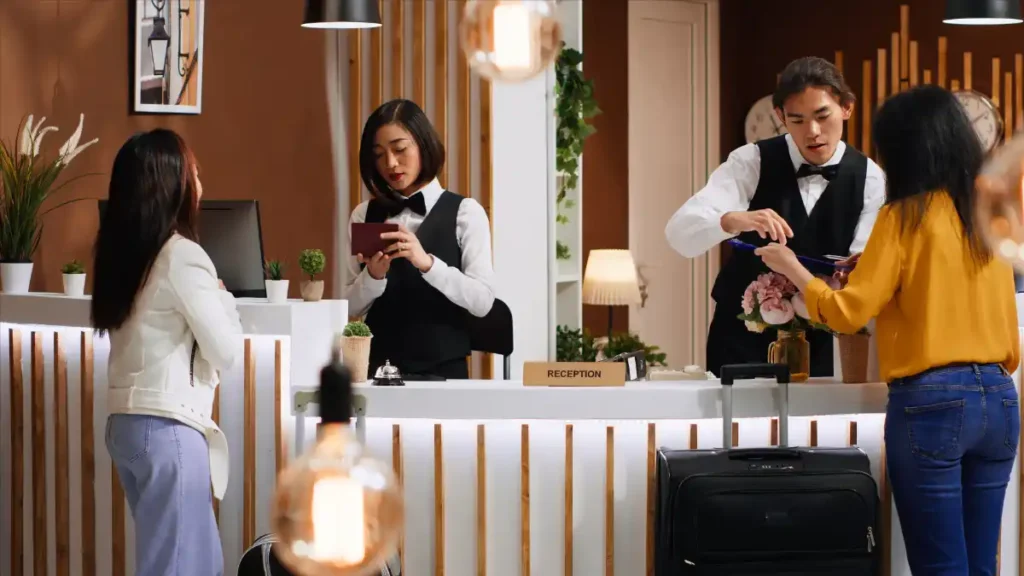
Checking in at a hotel
Conversation
Hotel Guest
안녕하세요.
(Annyeonghaseyo.)
Hello.
Hotel Receptionist
안녕하세요. 무엇을 도와드릴까요?
(Annyeonghaseyo. Mueoseul dowadeurilkkayo?)
Hello. How can I help you?
Hotel Guest
체크인 하고 싶어요.
(Chekeuin hago sipeoyo.)
I want to check in.
Hotel Receptionist
성함이 어떻게 되세요?
(Seonghami eotteoke doeseyo?)
What is your name?
Hotel Guest
김민수입니다.
(Gim Minsuimnida.)
It's Kim Minsu.
Hotel Receptionist
네, 김민수 손님. 방은 302호입니다.
(Ne, Gim Minsu sonnim. Bang-eun sam-gong-i-hoimnida.)
Okay, Mr. Kim Minsu. Your room is 302.
Hotel Guest
감사합니다. 열쇠 여기 있어요?
(Gamsahamnida. Yeolsoe yeogi isseoyo?)
Thank you. Is the key here?
Hotel Receptionist
네, 여기 있습니다.
(Ne, yeogi itseumnida.)
Yes, here it is.
Hotel Guest
와이파이 비밀번호는 뭐예요?
(Waipai bimilbeonhoneun mwoyeyo?)
What is the Wi-Fi password?
Hotel Receptionist
비밀번호는 'hotel1234'입니다.
(Bimilbeonhoneun 'hotel1234'imnida.)
The password is 'hotel1234'.
Hotel Guest
네, 알겠습니다. 감사합니다.
(Ne, algetseumnida. Gamsahamnida.)
Okay, I understand. Thank you.
Hotel Receptionist
즐거운 시간 되세요.
(Jeulgeoun sigan doeseyo.)
Have a good time.
Key Vocabulary
- 안녕하세요 (Annyeonghaseyo) — Hello
- 무엇을 도와드릴까요? (Mueoseul dowadeurilkkayo?) — How can I help you?
- 체크인 (Chekeuin) — Check-in
- 하고 싶어요 (Hago sipeoyo) — I want to do
- 성함 (Seongham) — Name (honorific)
- 방 (Bang) — Room
- 감사합니다 (Gamsahamnida) — Thank you
- 열쇠 (Yeolsoe) — Key
- 여기 (Yeogi) — Here
- 와이파이 (Waipai) — Wi-Fi
- 비밀번호 (Bimilbeonho) — Password
- 즐거운 시간 되세요 (Jeulgeoun sigan doeseyo) — Have a good time
Grammar Notes
Verb stem + ~고 싶어요 (I want to ~)
This expresses a desire or wish. You attach ~고 싶어요 to the stem of a verb.
Example: “체크인 하고 싶어요 (I want to check in.)”
N + 입니다/입니다 (It is N)
This is a basic way to state what something is or who someone is. 입니다 is used after a consonant, and 입니다 after a vowel.
Example: “김민수입니다 (It's Kim Minsu.)”
N + 은/는 (Topic Marker)
은/는 is a topic marker. It indicates what the main topic of the sentence is. 은 is used after a consonant, and 는 after a vowel.
Example: “방은 302호입니다. (The room is 302.)”