



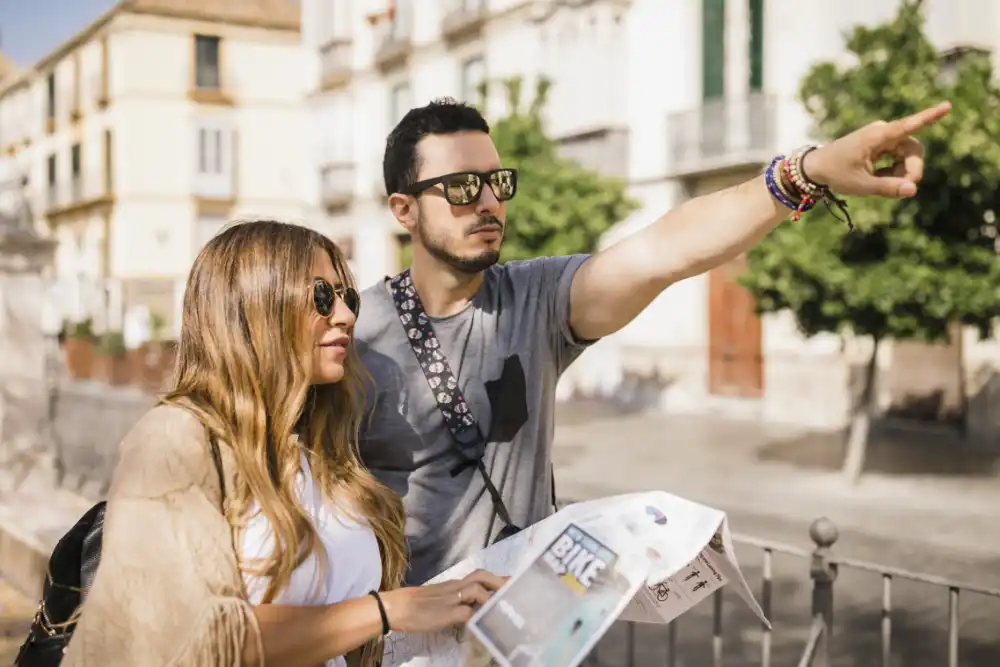
Una conversación sencilla entre un turista y una persona local que pide direcciones para ir al museo.
A simple conversation between a tourist and a local person asking for directions to the museum.
Conversation
Tourist
¡Hola! ¿Perdón?
Hello! Excuse me?
Local Person
Sí, diga.
Yes, tell me.
Tourist
¿Dónde está el museo?
Where is the museum?
Local Person
El museo está cerca.
The museum is close.
Tourist
¿Cómo voy al museo?
How do I go to the museum?
Local Person
Vaya todo recto.
Go straight ahead.
Tourist
¿Todo recto?
Straight ahead?
Local Person
Sí, y luego gire a la derecha.
Yes, and then turn right.
Tourist
A la derecha. ¿Está lejos?
To the right. Is it far?
Local Person
No, no está lejos. Está enfrente del parque.
No, it's not far. It's in front of the park.
Tourist
¡Ah, gracias! ¡Muchas gracias!
Ah, thank you! Thank you very much!
Local Person
De nada.
You're welcome.
Key Vocabulary
- ¡Hola! — Hello!
- ¿Perdón? — Excuse me?
- ¿Dónde está…? — Where is…?
- el museo — the museum
- cerca — close / near
- ¿Cómo voy…? — How do I go…?
- Vaya todo recto — Go straight ahead
- gire a la derecha — turn right
- lejos — far
- enfrente de — in front of
- el parque — the park
- De nada — You're welcome
Grammar Notes
Asking 'Where is…?'
To ask for the location of something, use '¿Dónde está…?' (Where is…?). 'Está' is the third person singular of the verb 'estar' (to be) for location.
Example: “¿Dónde está el museo?”
Giving simple directions
Common phrases for giving directions include 'Vaya todo recto' (Go straight ahead) and 'gire a la derecha/izquierda' (turn right/left). These are informal commands.
Example: “Vaya todo recto. Y luego gire a la derecha.”